Global Japanese Sushi Rolls
Highlighted under: Spicy Food
I love making sushi rolls at home, and these Global Japanese Sushi Rolls have become a favorite in our household. Each roll is a delicious burst of flavor, combining fresh ingredients with the perfect balance of textures. I enjoy experimenting with various fillings, from traditional fish to vibrant vegetables, creating a colorful platter that's perfect for sharing. The joy of rolling sushi is where the fun begins, and I can't wait to guide you through it—all you need is a little patience and creativity!
When I first tried making sushi at home, I was surprised by how easy and rewarding it was. I learned that using high-quality ingredients makes a significant difference in flavor and texture. For these Global Japanese Sushi Rolls, I like to play with a mix of fresh seafood and vibrant vegetables to complement the sticky rice. It’s all about balance and creativity!
One technique that has truly enhanced my sushi-making is using a bamboo mat. It helps to shape the rolls evenly and tightly, leading to the perfect sushi every time. My friends can’t believe I made these rolls myself, and I love sharing my passion with them!
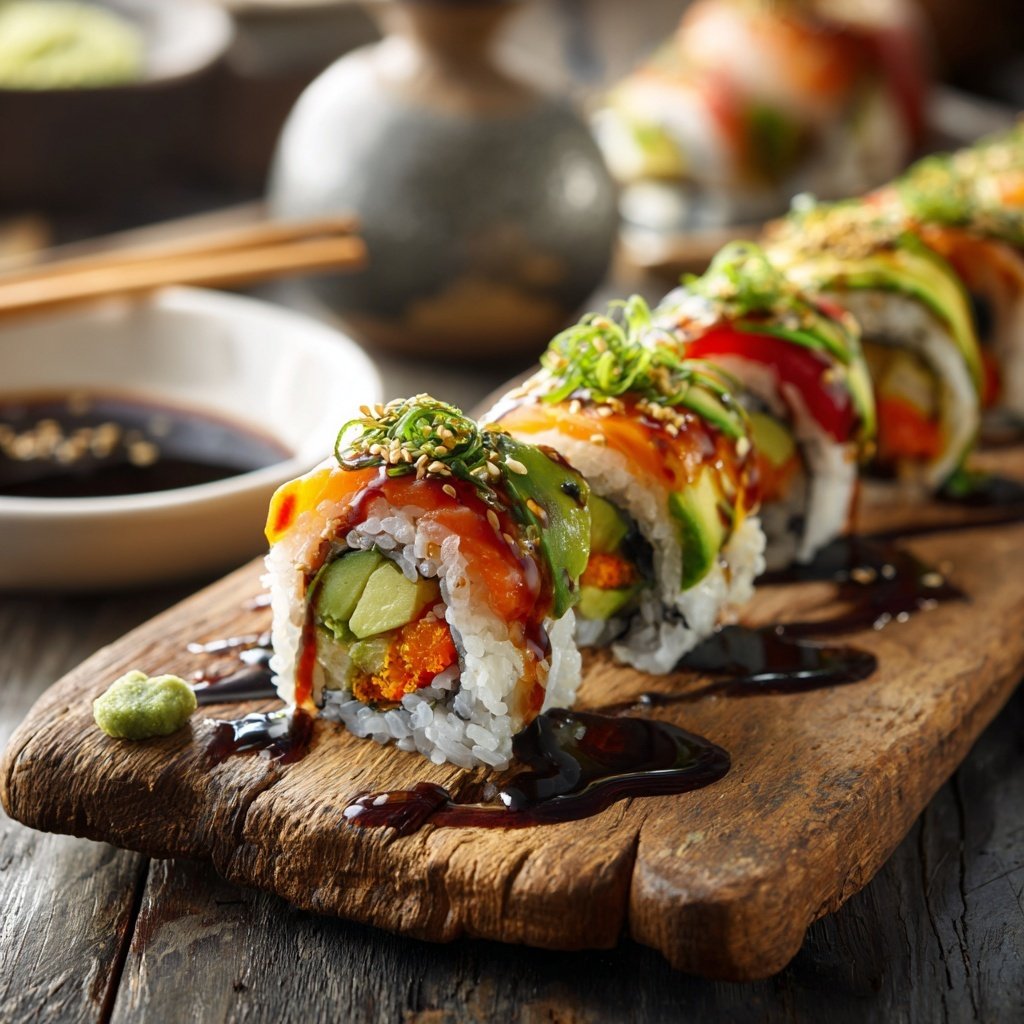
What You'll Love About These Rolls
- Fresh, vibrant flavors that excite your taste buds
- Fun and interactive way to enjoy a meal with friends
- Versatile fillings to suit everyone's tastes
Mastering Sushi Rice
The foundation of great sushi rolls is perfectly seasoned sushi rice. It's crucial to rinse the rice thoroughly under cold water until the water runs clear; this removes excess starch and prevents gummy rice. Once cooked, let it sit covered for 10 minutes to ensure even texture. Pay attention to your cooker's settings; using the sushi rice setting will yield the best results, ensuring soft but not mushy grains that hold together well.
After seasoning the rice with a mixture of warmed rice vinegar, sugar, and salt, it's essential to fold it gently. This aeration gives the rice a glossy finish that enhances both its flavor and appearance. Letting it cool to room temperature is vital, as warm rice will make the nori soggy, causing your rolls to fall apart. The perfect sushi rice should be sticky enough to hold together yet firm enough to maintain structure.
Choosing Delicious Fillings
Selecting fresh, high-quality fillings is key to elevating your sushi rolls. Fresh fish, like tuna and salmon, should be sushi-grade and preferably sourced from a reputable fishmonger; look for vibrant colors and a pleasant sea scent. If you find yourself without fresh fish, consider substituting with marinated tempeh or grilled veggies for a vegetarian option, which can still provide that satisfying umami flavor.
When it comes to vegetables, choices like crunchy cucumber and creamy avocado bring not just flavor but also texture contrast. Remember to julienne your vegetables uniformly to ensure even distribution in each roll. This way, every bite bursts with flavors and textures. A sprinkle of toasted sesame seeds before rolling can add an extra crunch and visual appeal, making your sushi rolls not just delicious but also vibrant and inviting.
Rolling Techniques and Presentation
When rolling sushi, the technique can make or break your creation. Start by positioning the nori sheet shiny side down on the bamboo mat; this will allow the rice to stick better. As you lay out the rice, press gently but firmly, ensuring an even layer that covers about two-thirds of the nori. This approach allows room for the edge to remain bare, which is crucial for sealing the roll later on.
Once you’ve placed your fillings, remember to roll tightly but gently. Using consistent pressure prevents the roll from being crushed, leading to a more professional-looking presentation. After slicing, a sharp knife is essential to ensure clean cuts; a damp knife can prevent the rice from sticking. For an attractive presentation, consider serving your sushi on a dark ceramic plate, which will beautifully contrast with the colorful ingredients, inviting everyone to indulge.
Ingredients
Sushi Rice
- 2 cups sushi rice
- 2 1/2 cups water
- 1/4 cup rice vinegar
- 2 tablespoons sugar
- 1 teaspoon salt
Fillings
- 1/2 lb fresh tuna, sliced
- 1/2 lb salmon, sliced
- 1 avocado, sliced
- 1 cucumber, julienned
- 1 carrot, grated
- Nori sheets
Dipping Sauce
- Soy sauce
- Wasabi
- Pickled ginger
Instructions
Prepare Sushi Rice
Rinse the sushi rice under cold water until the water runs clear. Combine the rinsed rice and water in a rice cooker and start it. Once finished, let it sit for 10 minutes before transferring to a large bowl.
Season the Rice
In a small saucepan, heat rice vinegar, sugar, and salt until dissolved. Pour over the warm rice and gently fold to combine. Allow the rice to cool to room temperature.
Roll the Sushi
Place a nori sheet on a bamboo mat. Wet your hands and grab a handful of rice, spreading it evenly across the nori, leaving about an inch at the top. Add your desired fillings in the center of the rice.
Tighten the Roll
Lift the bamboo mat and start to roll the nori over the fillings tightly while pressing gently. Continue rolling until you reach the edge of the nori. Use a little water to seal the edge.
Slice and Serve
Use a sharp knife to slice the roll into bite-sized pieces. Serve with soy sauce, wasabi, and pickled ginger.
Pro Tips
- Experiment with different fillings, such as cream cheese or tempura vegetables, for a unique twist. Make sure your knife is wet when slicing to get clean cuts.
Handling Leftovers
If you find yourself with extra sushi rolls, storing them properly is key to maintaining freshness. Wrap each roll tightly in plastic wrap to prevent them from drying out, and they can be kept in the refrigerator for up to 24 hours. However, be mindful that the nori may lose its crispness. To maintain texture, consider keeping the fillings separate and rolling them fresh when you’re ready to eat.
Reheating sushi is not recommended, as it can compromise the taste and texture. Instead, if you have leftover rice, try using it in sushi bowls; reheat the rice in a microwave, adding a splash of water to maintain moisture, and top with the same fillings for a quick meal.
Exploring Variations
Sushi is incredibly versatile, so don't hesitate to experiment with different fillings and flavor profiles. Try incorporating fruits like mango or pineapple for a sweet twist, or opt for cooked options like tempura shrimp or grilled chicken for a hearty alternative. Each variation can create a new taste experience, ensuring that sushi night never gets boring.
For a fun twist on presentation, consider making sushi cones (temaki) by rolling nori sheets into cone shapes filled with rice and your choice of fillings. This hands-on approach can be an engaging way to allow guests to create their own custom rolls, making your sushi night not just a meal but an experience.
Advanced Techniques
Once you feel confident with the basics, try your hand at more advanced rolling techniques, such as the inside-out roll, where the rice is on the outside of the nori. This style often highlights the colorful ingredients inside and is a visually stunning option for impressing guests. Mastering the inside-out roll requires a bit more practice but offers a delightful twist to your sushi-making skills.
For added elegance, consider garnishing your sushi rolls with microgreens or edible flowers. They not only enhance the visual appeal but also add subtle layers of flavor that can complement the main ingredients beautifully, transforming a simple homemade roll into a gourmet experience.
Questions About Recipes
→ Can I use brown rice for sushi?
While you can use brown rice, it has a different texture and flavor, and may require adjustments in cooking time.
→ What is the best fish for sushi?
Sashimi-grade fish like tuna and salmon are the best options. Always purchase from a reputable source.
→ How can I prevent the sushi from falling apart?
Make sure to roll tightly and use enough rice to hold the fillings together. Sealing the edge with water also helps.
→ Can sushi be made vegetarian?
Absolutely! Fill your rolls with fresh veggies like avocado, cucumber, carrots, and even tempura for added texture.
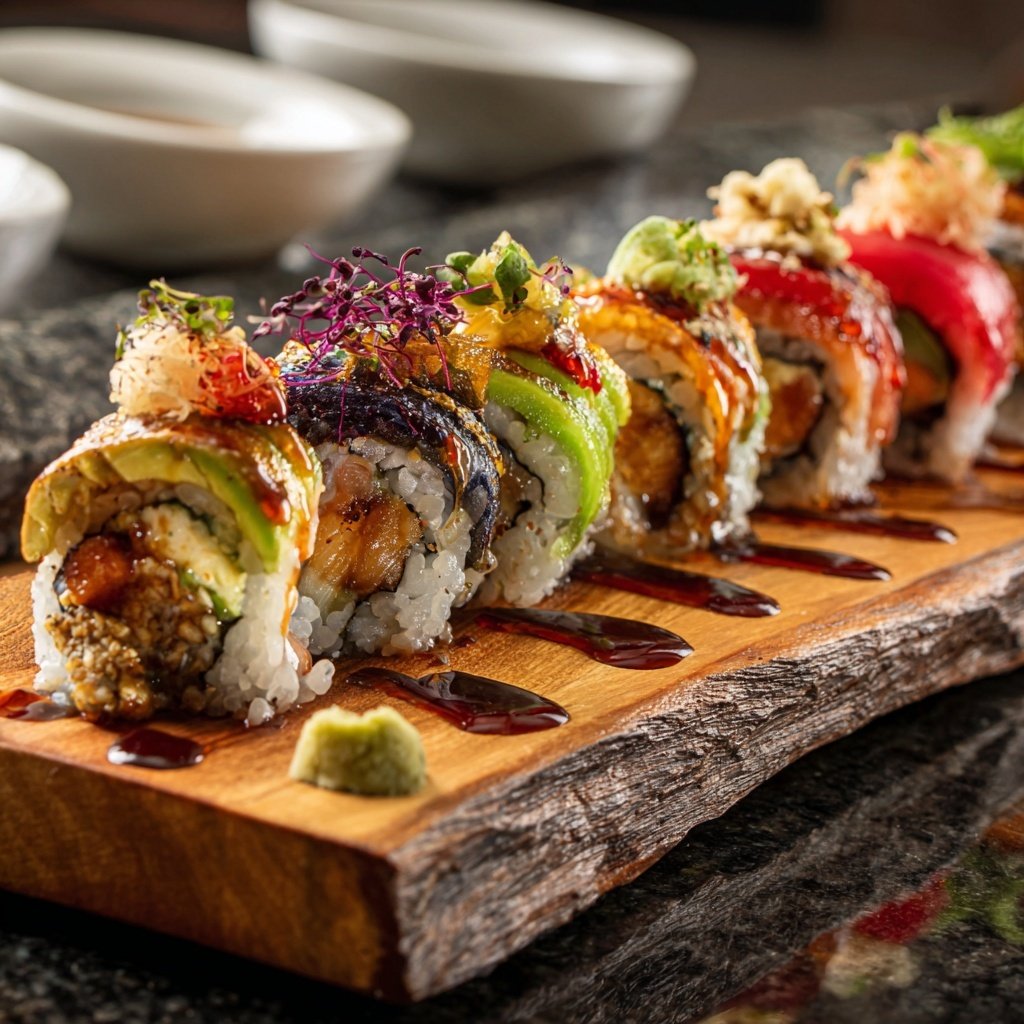
Global Japanese Sushi Rolls
Created by: The Chefisabelfoods Team
Recipe Type: Spicy Food
Skill Level: Intermediate
Final Quantity: 4 servings
What You'll Need
Sushi Rice
- 2 cups sushi rice
- 2 1/2 cups water
- 1/4 cup rice vinegar
- 2 tablespoons sugar
- 1 teaspoon salt
Fillings
- 1/2 lb fresh tuna, sliced
- 1/2 lb salmon, sliced
- 1 avocado, sliced
- 1 cucumber, julienned
- 1 carrot, grated
- Nori sheets
Dipping Sauce
- Soy sauce
- Wasabi
- Pickled ginger
How-To Steps
Rinse the sushi rice under cold water until the water runs clear. Combine the rinsed rice and water in a rice cooker and start it. Once finished, let it sit for 10 minutes before transferring to a large bowl.
In a small saucepan, heat rice vinegar, sugar, and salt until dissolved. Pour over the warm rice and gently fold to combine. Allow the rice to cool to room temperature.
Place a nori sheet on a bamboo mat. Wet your hands and grab a handful of rice, spreading it evenly across the nori, leaving about an inch at the top. Add your desired fillings in the center of the rice.
Lift the bamboo mat and start to roll the nori over the fillings tightly while pressing gently. Continue rolling until you reach the edge of the nori. Use a little water to seal the edge.
Use a sharp knife to slice the roll into bite-sized pieces. Serve with soy sauce, wasabi, and pickled ginger.
Extra Tips
- Experiment with different fillings, such as cream cheese or tempura vegetables, for a unique twist. Make sure your knife is wet when slicing to get clean cuts.
Nutritional Breakdown (Per Serving)
- Calories: 450 kcal
- Total Fat: 10g
- Saturated Fat: 1.5g
- Cholesterol: 40mg
- Sodium: 500mg
- Total Carbohydrates: 70g
- Dietary Fiber: 3g
- Sugars: 2g
- Protein: 20g